
How to Choose the Right Material Testing Machine for Your Laboratory
Selecting the right material testing machine is one of the most important decisions for any laboratory, university, research center, or industrial quality control facility. The accuracy of your test results, compliance with international standards, operational efficiency, and long-term investment value all depend on choosing the correct testing equipment.
Whether you perform concrete, cement, soil, asphalt, rock, or advanced material testing, understanding your testing requirements is the first step toward building a reliable laboratory.
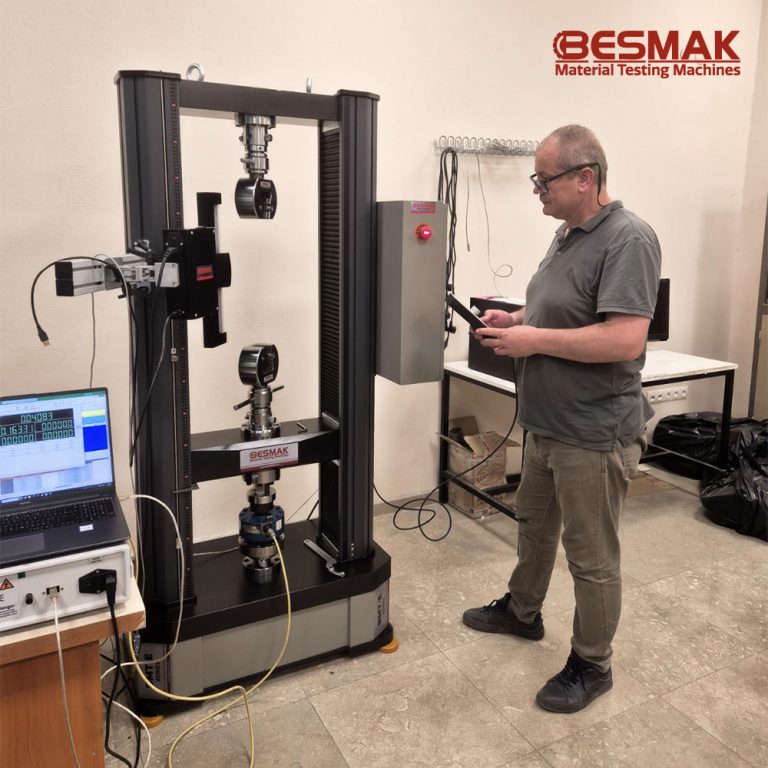
Why Choosing the Right Material Testing Machine Matters
A properly selected material testing machine ensures:
- Accurate and repeatable test results
- Compliance with ASTM, EN, ISO, and other international standards
- Improved laboratory productivity
- Reduced operator errors
- Long-term reliability and lower maintenance costs
Modern laboratories increasingly require automated systems capable of generating precise data while minimizing human intervention.
Determine Your Testing Requirements
Before purchasing any laboratory testing equipment, laboratories should clearly define:
Different materials require different testing systems:
- Concrete
- Cement
- Soil
- Asphalt
- Rock
- Metals
- Composites
- Plastics
The required machine depends on the test method:
- Compression Testing
- Flexural Testing
- Tensile Testing
- Fatigue Testing
- Dynamic Testing
- Impact Testing
- Durability Testing
Key Factors to Consider When Selecting a Material Testing Machine
Before purchasing any laboratory testing equipment, laboratories should clearly define:
The machine capacity should match your testing requirements.
Examples:
- Cement Testing Machines
- Concrete Compression Testing Machines
- Universal Testing Machines
- Fatigue Testing Systems
Choosing excessive capacity may increase costs unnecessarily, while insufficient capacity may limit testing capabilities.
High-quality testing machines should provide:
- Class 0.5 or better accuracy
- Stable load control
- Reliable data acquisition
- Repeatable results
Accurate measurements are essential for research, certification, and quality control.
Modern laboratories increasingly prefer fully automated control systems.
Advanced controllers provide:
- Closed-loop control
- Real-time monitoring
- Automatic test procedures
- Automatic reporting
- Remote data storage
For example, modern SEMATRON control systems allow laboratories to perform highly accurate and fully automated testing procedures.
Choosing the Right Equipment for Different Laboratories
Recommended equipment:
- Compression Testing Machine
- Flexural Testing Machine
- Concrete Curing Equipment
- Concrete Crack Measurement Systems
Recommended equipment:
- Cement Compression Testing Machine
- Flexural Testing Equipment
- Vicat Apparatus
- Mortar Mixers
Recommended equipment:
- CBR Testing Machine
- Direct Shear Apparatus
- Consolidation Testing Equipment
- Triaxial Testing Systems
Recommended equipment:
- Universal Testing Machines
- Servo Hydraulic Actuator Systems
- Dynamic Fatigue Testing Machines
- Environmental Test Chambers
Importance of International Standards
When selecting a material testing machine, always verify compliance with applicable standards such as:
- ASTM
- EN
- ISO
- AASHTO
Compliance ensures that test results are accepted worldwide and remain consistent across laboratories.
Future-Proofing Your Laboratory Investment
Laboratories should invest in systems that offer:
- Software upgrades
- Modular accessories
- Expandable configurations
- Advanced data analysis
- Long-term technical support
This approach reduces future equipment replacement costs and increases operational flexibility.
Why Laboratories Worldwide Choose BESMAK
With more than 30 years of experience and exports to over 75 countries, BESMAK develops advanced material testing machines for laboratories, universities, research institutions, and industrial quality control facilities.
BESMAK solutions combine:
- High accuracy
- Advanced automation
- International standard compliance
- Robust machine design
- Long-term technical support
Frequently Asked Questions
The ASTM C39 testing procedure consists of several important steps.
A material testing machine is laboratory equipment used to determine the mechanical properties of materials such as strength, stiffness, durability, and deformation behavior.
Compression testing machines and flexural testing machines are the most commonly used systems in concrete laboratories.
Higher accuracy improves test reliability and ensures compliance with international standards.
Depending on the application, machines should comply with ASTM, EN, ISO, or AASHTO standards.
Yes. Universal Testing Machines can perform tensile, compression, flexural, and many other mechanical tests with appropriate accessories.