

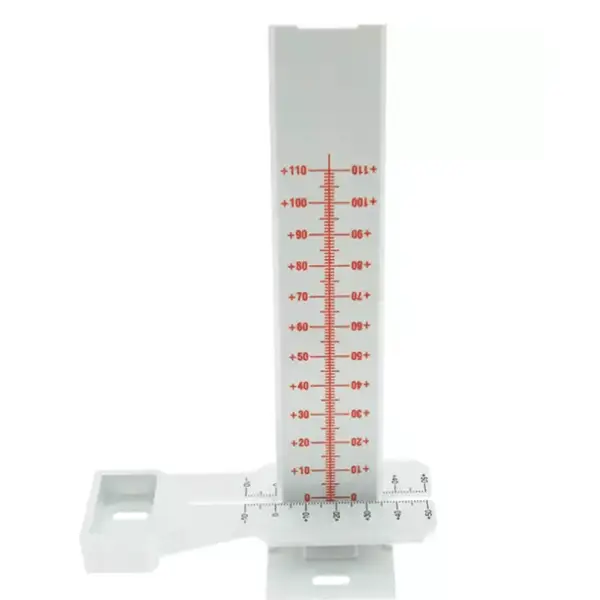
CONCRETE CRACK GAUGE – BRC-712
Monitor crack movement accurately with the BESMAK Concrete Crack Gauge. Designed for measuring and tracking crack width changes in concrete structures, this practical device helps engineers, inspectors, and maintenance teams evaluate structural behavior over time and detect potential issues before they become critical.
What Is a Concrete Crack Gauge?
A Concrete Crack Gauge is a precision instrument used to monitor and measure crack movement in concrete, masonry, and structural elements. It provides a simple and reliable way to observe changes in crack width caused by loading, shrinkage, thermal expansion, settlement, or environmental conditions.
The gauge can be permanently installed on a crack to provide continuous visual monitoring of structural movement.
Types of Crack Gauges
Standard Crack Gauge
The Standard Crack Gauge is used to monitor both horizontal and vertical movement across a crack. It provides a clear visual indication of crack displacement and helps determine whether the crack remains stable or continues to propagate.
Displacement Crack Gauge
The Displacement Crack Gauge is designed to monitor horizontal and vertical displacement when there is a step or offset across a crack caused by out-of-plane movement. This type is especially useful for assessing structural deformation and settlement-related damage.
Corner Crack Gauge for Corners
The Corner Crack Gauge features a hinged mounting bracket that allows monitoring of cracks located in corners with angles between 70° and 180°. It is ideal for walls, columns, beams, and structural intersections where standard gauges cannot be installed effectively.
Applications of Concrete Crack Gauges
Concrete Crack Gauges are widely used in:
- Concrete buildings
- Bridges and highways
- Tunnels and underground structures
- Retaining walls
- Industrial facilities
- Dams and hydraulic structures
- Historical building restoration projects
- Structural health monitoring programs
Benefits of Using a Concrete Crack Gauge
- Easy installation and operation
- Accurate crack movement monitoring
- Suitable for long-term measurements
- Cost-effective structural assessment solution
- Helps identify progressive structural damage
- Supports preventive maintenance programs
- Reliable monitoring of crack displacement and growth
Why Choose BESMAK Concrete Crack Gauges?
BESMAK Concrete Crack Gauges provide a practical and reliable solution for monitoring structural cracks in concrete and masonry structures. Manufactured for professional inspection and testing applications, they offer durability, accuracy, and ease of use for engineers, laboratories, consultants, and infrastructure maintenance teams.
Common Causes of Concrete Cracks
Concrete cracks may develop due to:
- Drying shrinkage
- Thermal expansion and contraction
- Foundation settlement
- Excessive loading
- Reinforcement corrosion
- Seismic activity
- Poor construction practices
- Environmental exposure
Monitoring these cracks with a Concrete Crack Gauge allows engineers to determine whether movement is active or stable and to make informed maintenance decisions.
Frequently Asked Questions (FAQ)
What is a Concrete Crack Gauge used for?
A Concrete Crack Gauge is used to monitor changes in crack width and displacement in concrete, masonry, and structural elements over time.
Can a crack gauge measure both horizontal and vertical movement?
Yes. Standard and displacement crack gauges can monitor both horizontal and vertical crack movements depending on the application.
How accurate is a Concrete Crack Gauge?
Concrete Crack Gauges provide precise visual measurements of crack movement and are widely used for structural monitoring and inspection purposes.
Where can crack gauges be installed?
They can be installed on walls, slabs, beams, columns, bridges, tunnels, retaining walls, and other concrete structures.
Why is crack monitoring important?
Crack monitoring helps determine whether a crack is stable or actively growing, allowing engineers to evaluate structural safety and plan maintenance actions.
Internal Linking
- Crack Measuring Microscope
- Concrete Test Hammer
- Ultrasonic Pulse Velocity Tester
- Profometer Rebar Detector
- Climate Chamber Testing
- Freeze-Thaw Concrete Testing
- Compression Testing Machine
- Universal Testing Machine
- Concrete Testing Equipment


