

Automated Vehicle Inspection System: The Complete Guide to Detecting Hidden Vehicle Defects
An automatic vehicle scanning system with active thermography helps detect hidden vehicle damage quickly and accurately. In modern inspection processes, speed and precision are critical. Therefore, advanced scanning systems play an essential role in improving inspection quality. For this reason, many inspection centers prefer automated systems over traditional manual methods. In addition, active thermography allows deeper analysis by detecting temperature differences on the vehicle surface. As a result, hidden defects become visible without damaging the vehicle.
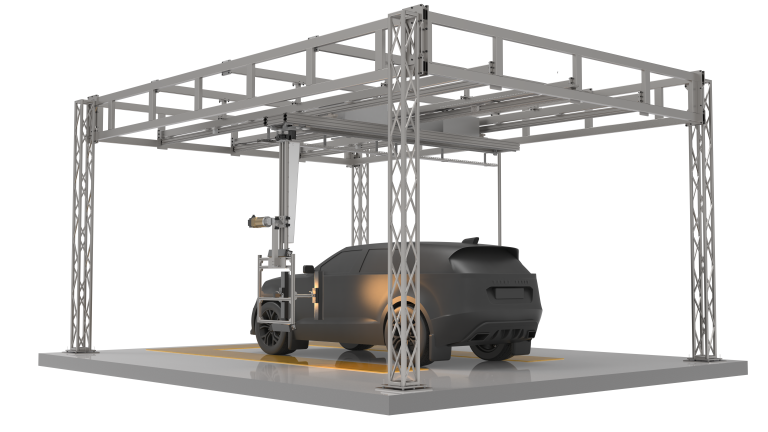
What Is an Automated Vehicle Inspection System?
An automated vehicle inspection system is an advanced technology that evaluates the condition of a vehicle using non-contact sensors, infrared cameras, and intelligent software. Unlike traditional manual inspections, this system automatically scans the entire vehicle body and identifies hidden repairs, paint thickness differences, welding defects, and structural irregularities.
Modern systems such as BESMAK CarScan use active thermography to reveal defects that cannot be detected with the naked eye.
Why Traditional Vehicle Inspections Are Not Enough
Conventional inspection methods rely on:
- Visual examination
- Handheld paint thickness gauges
- Technician experience
- Limited spot measurements
These methods may miss:
- Repainted panels
- Filler applications
- Hidden accident repairs
- Uneven welding
- Structural modifications
An automated vehicle inspection system eliminates subjective judgment and provides fast, repeatable, and objective results
How an Automated Vehicle Inspection System Works
Controlled Thermal Excitation
The vehicle surface is exposed to a precisely controlled flash.
Infrared Data Capture
A high-resolution infrared camera records the thermal response.
Intelligent Software Analysis
Specialized software processes the thermal patterns and generates color maps.
Automated Reporting
The system produces a clear report showing suspicious areas.
What Defects Can Be Detected?
Hidden Body Repairs
Detects areas repaired with filler or repainting.
Paint and Coating Thickness Differences
Identifies non-uniform paint layers.
Welding and Structural Repairs
Reveals accident-related weld repairs.
Subsurface Damage
Finds defects not visible on the surface.
Main Benefits of an Automated Vehicle Inspection System
Full Vehicle Scan
Inspects the entire body instead of isolated points.
Non-Contact Technology
No physical contact with the vehicle surface.
Inspection in Approximately 6 Minutes
Fast enough for high-volume operations.
Repeatable Results
Consistent measurements independent of the operator.
No Cleaning Required
Vehicles can be inspected without special preparation.
Objective and Reliable Analysis
Reduces human error and subjective interpretation.
Industries That Use Automated Vehicle Inspection Systems
Used Car Dealerships
Verify vehicle condition before resale.
Insurance Companies
Support claim assessment and fraud detection.
Fleet Operators
Inspect vehicles systematically.
Automotive Service Centers
Confirm repair quality.
Vehicle Auction Houses
Provide transparent condition reports.
Automated Vehicle Inspection System vs Manual Inspection
| Feature | Manual Inspection | Automated Vehicle Inspection System |
|---|---|---|
| Inspection Coverage | Limited | Full vehicle surface |
| Speed | 20–60 minutes | ~6 minutes |
| Repeatability | Operator dependent | Highly repeatable |
| Hidden Defect Detection | Limited | Excellent |
| Reporting | Subjective | Objective and visual |
Why Active Thermography Is a Game Changer
Active thermography uses controlled heating and infrared imaging to detect differences in thermal behavior caused by:
- Repaired body panels
- Filler materials
- Paint thickness changes
- Welding modifications
This technology reveals structural anomalies quickly and accurately.
How to Choose the Best Automated Vehicle Inspection System
Consider the following criteria:
Thermal Camera Resolution
Higher resolution improves defect detection.
Inspection Speed
Faster systems increase throughput.
Software Quality
Look for intuitive analysis and reporting tools.
Repeatability
Reliable results are essential for professional use.
Global Technical Support
Choose a manufacturer with proven engineering support.
BESMAK CarScan Automated Vehicle Inspection System
BESMAK CarScan combines active thermography, infrared imaging, and intelligent software to provide rapid and objective vehicle inspections.
Key advantages include:
- Full-body scanning
- Inspection in approximately 6 minutes
- Non-contact operation
- High-resolution IR imaging
- Repeatable and objective analysis
- Global installation and technical support
Frequently Asked Questions
Can this system detect repaired accident damage? Yes. It identifies repainting, fillers, and welding repairs.
Does the inspection damage the vehicle? No. The system is completely non-contact.
How long does one inspection take? Approximately 6 minutes.
Is operator experience required? Minimal training is needed because the process is automated.
Conclusion
An automated vehicle inspection system provides a faster, more accurate, and more reliable alternative to traditional vehicle inspections. By using active thermography and intelligent analysis, it uncovers hidden repairs and structural irregularities that manual methods often miss.
For dealerships, insurance companies, fleet operators, and inspection centers, this technology improves efficiency and builds trust.
Request More Information
If you are looking for a professional automated vehicle inspection system, contact BESMAK to learn more about CarScan and receive detailed technical information.