
How to Choose a Universal Testing Machine: A Complete Guide
Choosing the right universal testing machine is an important decision for laboratories, manufacturers, research institutions, and quality control departments. The correct testing system ensures accurate results, reliable performance, and compliance with relevant international testing standards.
A Universal Testing Machine (UTM) is designed to perform a wide range of mechanical tests on materials and components. Depending on the machine configuration, it can be used for tensile, compression, bending, flexural, shear, and other mechanical tests.
However, selecting the right system requires more than simply choosing a machine with sufficient load capacity. Test type, material, accuracy, drive system, grips, extensometers, software, and future testing requirements should all be considered.
In this guide, we explain how to choose a universal testing machine for your laboratory or testing application.
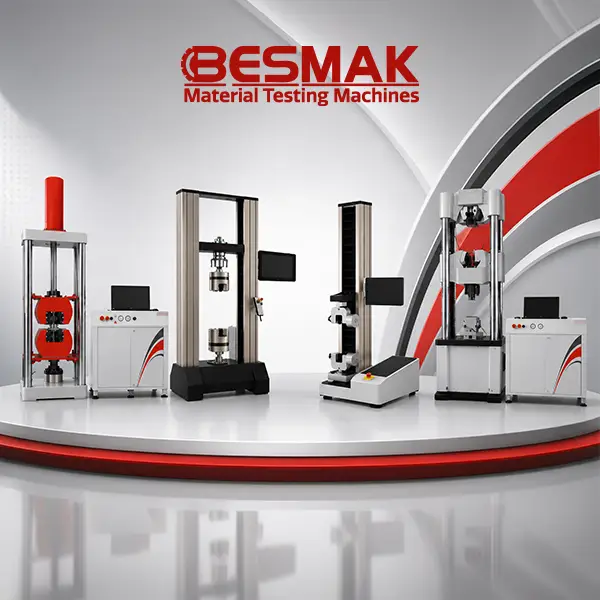
What Is a Universal Testing Machine?
A Universal Testing Machine is a mechanical testing system used to determine the strength and mechanical properties of materials.
These machines apply controlled forces to test specimens while measuring parameters such as load, displacement, deformation, and strain.
Universal testing machines can be used to test a wide variety of materials, including:
- Metals
- Plastics
- Polymers
- Composites
- Rubber
- Textiles
- Construction materials
- Automotive components
- Aerospace materials
- Industrial components
Depending on the testing requirements, a universal testing machine may use an electromechanical or servo hydraulic drive system.
What Tests Can a Universal Testing Machine Perform?
One of the main advantages of a universal testing machine is its versatility. By using the appropriate grips, fixtures, and accessories, a single testing system can perform multiple types of mechanical tests.
Tensile testing measures how a material behaves when subjected to a pulling force.
The test can determine important mechanical properties such as:
- Tensile strength
- Yield strength
- Elongation
- Elastic modulus
- Breaking strength
Tensile testing is widely used for metals, plastics, composites, cables, textiles, and many other materials.
Compression testing evaluates how a material or component behaves under compressive forces.
It can be used for materials and products such as:
- Metals
- Plastics
- Components
- Springs
- Packaging materials
- Construction materials
The correct compression platens and fixtures should be selected according to the specimen dimensions and test requirements.
Bending and flexural tests are used to evaluate the behavior of materials under bending loads.
Three-point and four-point bending fixtures can be used depending on the relevant test method and standard.
These tests are commonly performed on:
- Metals
- Plastics
- Composites
- Ceramics
- Construction materials
With suitable fixtures and accessories, universal testing machines can also perform shear, peel, tear, puncture, and other specialized mechanical tests.
This flexibility makes the UTM an essential testing system for modern material testing laboratories.
7 Factors to Consider When Choosing a Universal Testing Machine
Selecting the correct universal testing machine requires careful evaluation of the application. The following factors should be considered before choosing a system.
The first question is simple:
What type of test will you perform?
A laboratory performing tensile tests on metal specimens has different requirements from a laboratory testing plastics, rubber, composites, or industrial components.
Before selecting a machine, determine:
- The type of material
- The specimen geometry
- The required test method
- The expected maximum force
- The required test speed
- The applicable testing standards
The answers to these questions help determine the correct machine configuration.
Load capacity is one of the most important factors when choosing a universal testing machine.
The machine should have sufficient capacity for the expected maximum test force. However, selecting a machine with a much higher capacity than necessary may not always provide the best measurement performance for low-force tests.
For example, applications involving polymers or small components may require a lower-capacity electromechanical testing machine, while high-strength metallic materials may require a higher-capacity servo hydraulic system.
The load cell and machine capacity should be selected according to the actual testing range.
Universal testing machines are generally available with electromechanical or servo hydraulic drive systems.
The best choice depends on the material, load capacity, test speed, and application.
Electromechanical systems are commonly preferred for applications requiring precise control, especially at low and medium force ranges.
They are suitable for testing:
- Plastics
- Polymers
- Rubber
- Textiles
- Wires
- Small metallic specimens
- Components
Key advantages include: - Precise speed and displacement control
- Wide testing speed range
- Clean operation
- Low maintenance requirements
- High accuracy for low and medium force applications
Electromechanical systems are commonly preferred for applications requiring precise control, especially at low and medium force ranges.
They are suitable for testing:
- Plastics
- Polymers
- Rubber
- Textiles
- Wires
- Small metallic specimens
- Components
Key advantages include: - Precise speed and displacement control
- Wide testing speed range
- Clean operation
- Low maintenance requirements
- High accuracy for low and medium force applications
Servo Hydraulic vs Electromechanical Universal Testing Machines
The following comparison can help determine which system is more suitable for your application.
| Feature | Electromechanical UTM | Servo Hydraulic UTM |
|---|---|---|
| Typical Applications | Low- to medium-force testing | Medium- to high-force testing |
| Common Materials | Plastics, polymers, rubber, textiles, and small metal components | Metals, steel, high-strength alloys, and heavy-duty industrial components |
| Load Capacity | Low to medium capacities | Medium to very high capacities |
| Control & Precision | Excellent speed and displacement control with high precision | Excellent force control for demanding, high-load applications |
| Maintenance | Low maintenance with clean operation | Requires periodic hydraulic system maintenance |
| Operating Environment | Quiet, clean, and energy-efficient | Designed for heavy-duty industrial environments |
| Best Suited For | Research laboratories, quality control, and precision testing | Industrial production, structural testing, and high-capacity applications |
The final selection should always be based on the actual test method, required capacity, specimen type, and applicable standards.
4. Check the Accuracy and Measurement Requirements
Accurate measurement is essential for reliable mechanical testing.
When selecting a universal testing machine, consider the accuracy requirements for:
- Force
- Displacement
- Strain
- Test speed
- The machine should provide stable and repeatable measurement performance throughout the required testing range.
- Load cells, displacement measurement systems, extensometers, and data acquisition systems all contribute to the overall quality of the test results.
5. Select the Correct Grips and Fixtures
A universal testing machine cannot perform accurate tests without the correct grips and fixtures.
The appropriate gripping system depends on:
- Material type
- Specimen shape
- Specimen dimensions
- Maximum test force
- Test method
- Applicable standard
- Common accessories include:
- Wedge Grips
- Tensile grips
- Compression platens
- Three-point bending fixtures
- Four-point bending fixtures
- Shear fixtures
- Special-purpose test fixtures
- Incorrect grips may cause specimen slippage, premature failure, or inaccurate test results.
6. Determine Whether an Extensometer Is Required
An extensometer is used to measure the deformation or strain of a specimen during testing.
Depending on the application, different extensometer technologies may be used, including:
- Clip-on extensometers
- Contact extensometers
- Long Travel Extensometers
- Video Extensometers
- For applications requiring non-contact strain measurement, a video extensometer can provide significant advantages.
Video extensometers use optical measurement technology to monitor specimen deformation without physical contact with the specimen.
They can be especially useful for: - Plastics
- Composites
- Delicate specimens
- Materials with large deformation
- Applications where contact with the specimen should be avoided
7. Evaluate the Controller, Software, and Data Acquisition System
Modern universal testing machines should provide precise control and reliable data acquisition.
The control system should allow the operator to:
- Create test procedures
- Control test speed
- Monitor load and displacement
- Record test data
- Generate test graphs
- Analyze results
- Prepare test reports
- The software should also support repeatable testing procedures and efficient laboratory workflows.
- For advanced testing applications, the data acquisition rate and control capabilities should be evaluated according to the required test method.
Consider Current and Future Testing Requirements
A universal testing machine is a long-term investment.
For this reason, laboratories should consider not only their current testing requirements but also possible future applications.
Before choosing a system, consider:
- Will new materials be tested in the future?
- Will higher load capacities be required?
- Will additional grips or fixtures be needed?
- Will strain measurement be required?
- Will the laboratory need more advanced software functions?
A flexible and configurable testing system can help laboratories adapt to changing testing requirements.
Which Universal Testing Machine Is Right for Your Laboratory?
The correct UTM depends on the application.
Research laboratories often require flexible systems capable of testing different materials and specimen types.
An electromechanical universal testing machine may be suitable for many research applications because of its precise control and wide testing speed range.
Metal testing applications often require higher forces and robust gripping systems.
Depending on the specimen and required test force, a servo hydraulic universal testing machine may be the appropriate solution.
Plastics and polymers often require precise speed control and accurate strain measurement.
Electromechanical testing machines combined with suitable grips and extensometers are commonly used for these applications.
Industrial quality control laboratories require reliable, repeatable, and efficient testing systems.
The machine configuration should be selected according to:
- Production materials
- Testing frequency
- Applicable standards
- Required capacity
- Reporting requirements
Electromechanical systems are commonly preferred for applications requiring precise control, especially at low and medium force ranges.
They are suitable for testing:
- Plastics
- Polymers
- Rubber
- Textiles
- Wires
- Small metallic specimens
- Components
Key advantages include: - Precise speed and displacement control
- Wide testing speed range
- Clean operation
- Low maintenance requirements
- High accuracy for low and medium force applications
Why Machine Configuration Matters
Two laboratories may use universal testing machines with the same maximum capacity but require completely different configurations.
The correct system may include:
- A suitable load frame
- One or more load cells
- Appropriate grips
- Compression platens
- Bending fixtures
- Extensometers
- Test control software
- Special accessories
For this reason, selecting a universal testing machine should be based on the complete testing application rather than machine capacity alone.
Universal Testing Machines by BESMAK
BESMAK develops material testing systems for research, quality control, industrial, and academic applications.
Universal testing machine configurations can be selected according to:
- Required load capacity
- Material type
- Test method
- Specimen dimensions
- Gripping requirements
- Strain measurement requirements
- Applicable international standards
Depending on the application, testing systems can be configured with suitable grips, fixtures, extensometers, controllers, and software solutions.
Conclusion
Choosing the right universal testing machine requires careful evaluation of the complete testing application.
The most important factors include:
- Test type
- Material
- Required load capacity
- Electromechanical or servo hydraulic drive system
- Measurement accuracy
- Grips and fixtures
- Extensometer requirements
- Controller and software capabilities
- Future testing needs
A properly configured universal testing machine helps laboratories achieve accurate, repeatable, and reliable test results.
Instead of selecting a machine based only on maximum capacity, laboratories should evaluate the complete testing process and choose a system that meets both current and future requirements.
For help selecting the right universal testing machine and configuration for your application, contact BESMAK
Frequently Asked Questions About Universal Testing Machines
A universal testing machine is used to evaluate the mechanical properties of materials and components. Depending on the machine configuration and accessories, it can perform tensile, compression, bending, flexural, shear, and other mechanical tests.
To choose the right universal testing machine, consider the material, test type, maximum required force, testing speed, accuracy, grips, fixtures, strain measurement requirements, and applicable testing standards.
Electromechanical universal testing machines are commonly used for precise low and medium force applications, while servo hydraulic systems are generally preferred for high-force and heavy-duty testing applications.
The required load capacity depends on the expected maximum force during the test. The machine and load cell should be selected according to the actual force range of the application.
Yes. A universal testing machine can perform different mechanical tests by using suitable grips, fixtures, compression platens, bending devices, extensometers, and accessories.
An extensometer is required when accurate strain, elongation, or modulus measurements are needed. The appropriate extensometer type depends on the material, specimen, deformation range, and testing standard.