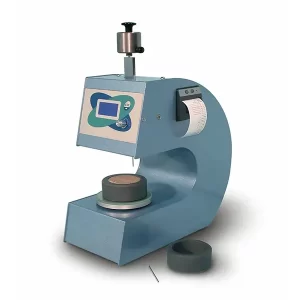
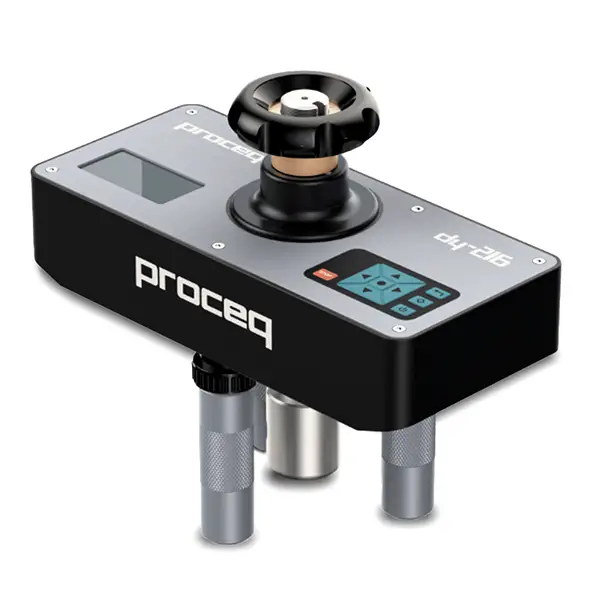
PULL-OFF TESTER – BCO-124/P
The device is a Proceq DY-225 model. This pull-off adhesion tester tests the adhesion of coatings to metal, wood, concrete, or similar surfaces with different models for several tensile force working capacities up to 25 kN.
Standards:
- ASTM C1583
- ASTM D4541
- ASTM D7234
- ASTM D7522
- EN 1015-12
- EN 12004-2
- EN 1348
- EN 1542
- ISO 4624
- JGJ 110
- JGJ 126
- JGJ 144
- SIS 281/3
- TOCT 22690
- ZTV-ING
Pull-off Tester Features
- Designed for pull-off adhesion testing of coatings
- Suitable for testing on metal surfaces
- Suitable for testing on wood surfaces
- Suitable for testing on concrete surfaces
- Compatible with other similar substrates
- Available in multiple models
- Different tensile force capacities to meet various testing requirements
- Maximum working capacity up to 25 kN
Technical Specifications
| Specification | Details |
|---|---|
| Product Code | BCO-124/P |
| Product Name | Pull-off Tester |
| Device Model | Proceq DY-225 |
| Test Type | Pull-off Adhesion Testing |
| Test Surfaces | Metal, Wood, Concrete and Similar Surfaces |
| Maximum Working Capacity | Up to 25 kN |
Pull-off Tester Models and Capacities
| Product Code | Product Name |
|---|---|
| BCO-124/P.346 10 000 | PROCEQ DY-206 Pull-off Tester – Up to 6 kN |
| BCO-124/P.346 20 000 | PROCEQ DY-216 Pull-off Tester – Up to 16 kN |
| BCO-124/P.346 30 000 | PROCEQ DY-225 Pull-off Tester – Up to 25 kN |
Pull-off Tester Applications
The BCO-124/P Pull-off Tester is designed to measure the adhesion strength of coatings and bonded materials on various substrates. It provides reliable pull-off adhesion testing for quality control, inspection, and research applications.
Typical applications include:
- Metal surfaces
- Wood surfaces
- Concrete surfaces
- Other similar construction and industrial materials
Different models are available with tensile force capacities ranging from 6 kN to 25 kN, allowing users to select the most suitable tester for their application.
Pull-off Tester Standards
The BCO-124/P Pull-off Tester is suitable for testing in accordance with the following international standards:
- ASTM D7522
- EN 1015-12
- ASTM C1583
- ASTM D4541
- ASTM D7234
- EN 12004-2
- EN 1348
- EN 1542
- ISO 4624
- JGJ 144
- SIS 281/3
- TOCT 22690
- ZTV-ING
Frequently Asked Questions About the Pull-off Tester
What is a Pull-off Tester used for?
A Pull-off Tester is used to determine the adhesion strength of coatings, overlays, repair materials, and bonded systems on metal, wood, concrete, and other similar surfaces.
Which materials can be tested with the Pull-off Tester?
The Pull-off Tester is suitable for adhesion testing on:
- Metal
- Wood
- Concrete
- Other similar substrates
What is the maximum working capacity of the Pull-off Tester?
Depending on the selected model, the Pull-off Tester offers tensile force capacities of up to 25 kN.
Which Pull-off Tester models are available?
The available models include:
- PROCEQ DY-206 – Up to 6 kN
- PROCEQ DY-216 – Up to 16 kN
- PROCEQ DY-225 – Up to 25 kN
Which model provides a capacity of up to 25 kN?
The PROCEQ DY-225 Pull-off Tester offers a maximum working capacity of 25 kN.
Can the Pull-off Tester be used on concrete?
Yes. The Pull-off Tester is specifically designed for adhesion testing on concrete and is also suitable for metal, wood, and similar surfaces.
Which testing standards does the Pull-off Tester comply with?
The Pull-off Tester is suitable for testing according to numerous international standards, including ASTM D7522, ASTM C1583, ASTM D4541, ASTM D7234, EN 1015-12, EN 12004-2, EN 1348, EN 1542, ISO 4624, and other listed standards.
Request More Information About the Pull-off Tester
Looking for a reliable Pull-off Tester for adhesion testing?
Contact BESMAK for detailed information about the BCO-124/P Pull-off Tester, available models, technical specifications, tensile force capacities, pricing, and quotation requests. Our team will help you select the most suitable solution for your testing requirements.